from Les Chants de Maldoror
Comte de Lautréamont
translated by Samuel Lees
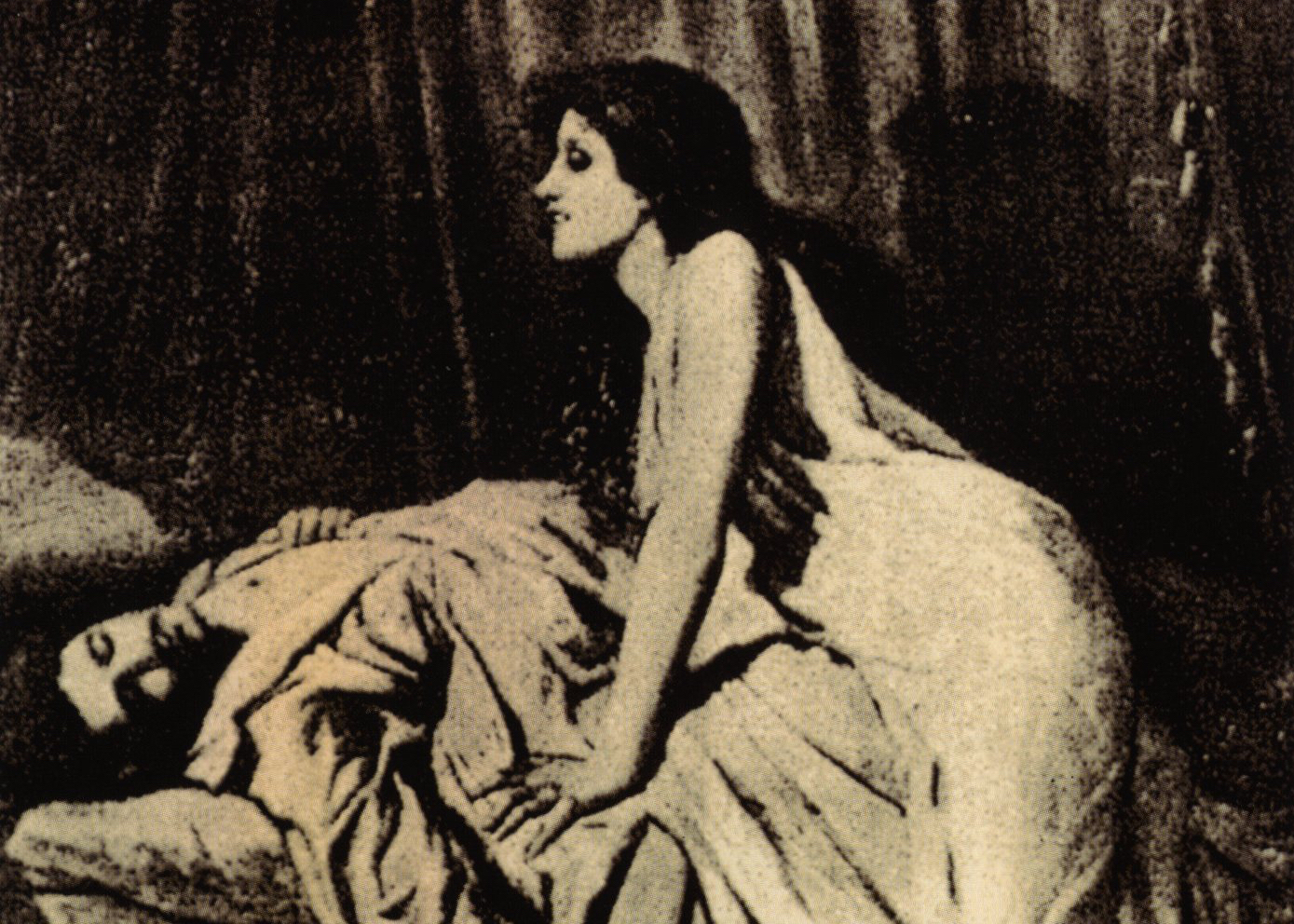
You have to let your nails grow for fifteen days.
Oh! how sweet it is to tear a child from his bed, a child with nothing yet upon his upper lip, and, as he looks at you, his eyes dilated with fear, to pass your hand gently over his brow, brushing back his golden hair! Then, all of a sudden, when he is least expecting it, you plunge your long nails into his tender flesh, taking care not to kill him, for if he were to die you would be deprived of the spectacle of his suffering. You then begin to drink his blood by licking the wounds and, during this time, which must seem an eternity, the child is crying. There is nothing as exquisite as his blood, extracted fresh from the source, and still warm, except perhaps his tears, which are bitter like salt.
Have you ever tasted your own blood, after cutting your finger by accident? It is exquisite, for it has no taste. And can you not recall an occasion when, overcome with sorrow, you lifted your hand to your face, stained by the sadness in your eyes, and, your hand then drawn irresistibly towards your mouth, you found yourself drinking your tears from that bitter cup, all the while trembling like the schoolboy who hears the cruel laugh of the one was born to make his life a misery? They are exquisite, for they taste of vinegar, like the tears of your mistress. But, for the refined palate, nothing can beat the tears of a child. The child is pure, he knows nothing of evil. Your mistress will betray you sooner or later… I imagine, for I know nothing of love and friendship (and it is unlikely that I ever will, not from the human race at any rate). Well, as you are not averse to your own blood and tears, feast, feast with relish upon the blood and tears of the child! Blindfold him before you tear into his pulsating flesh. And, after hours of listening to his sublime screams, redolent of the agonised cries of the battlefield, where the mutilated bodies of men are strewn like rose petals upon the ground, retire to a neighbouring room, from whence, moments later, you rush in like an avalanche, as if coming to his rescue. Unbind his hands, with their swollen nerves and veins, restore sight to his frantic eyes, and then begin once more to lick his blood and tears. How real, then, is your repentance! The spark of divinity that is in us all, and shows itself so rarely, appears, but alas, too late! How it warms your heart to be able to console a child who has been so wickedly abused:
― Oh! child, what cruel tortures you have suffered! Who could have committed this crime against you? A crime for which I cannot even find a name! You poor wretch! How you must suffer! If your mother knew of this, she would not be any closer to death, so abhorred by the guilty, than I am at this moment. Alas! what are good and evil? Are they but one thing, by which with rage we reveal our own weakness, and our desire to grasp the infinite, even by the most foolish means? Or are they two things apart? Yes… for my sake, they better be the same… for if not, what will be my fate come Judgement Day? Forgive me, child. The man who stands now before your noble and sacred countenance is the same man who broke your bones and tore the flesh that hangs from your body. Was this wicked humour the work of my diseased brain? or was it an obscure instinct, ungoverned by reason, like the eagle tearing its prey to pieces, that drove me to commit this crime? And yet, I suffered as much as my victim! Forgive me, child! When you and I have left this fleeting existence, I wish that our souls be entwined for eternity, existing as one, my mouth pressed against yours. Even then, my punishment would not be complete. You will tear my flesh with your nails and teeth at once, without ever stopping. I shall deck my body with fragrant garlands for this expiatory holocaust and we shall suffer as one. I shall suffer from my wounds and you from inflicting them. Oh! child with the golden hair and eyes so sweet, will you now do as I have told? I want you to do it, despite yourself. It will soothe my guilty conscience.
By the end of this speech, you will have harmed a human being and be adored by that same being: this is the greatest happiness one can imagine.
In due course, you can take him to the hospital. Being a cripple, he will never be able to make a living for himself. People will say that you were a good man. And wreaths of laurels and gold medals will be left at the foot of your tomb, with its old and noble face. Oh you, whose name I do not wish to write on this page devoted to the sanctity of the crime, I know your pardon will be as great as the universe. But I ― I live on!
 Samuel Lees