by Alfred Jarry
translated by Samuel Lees
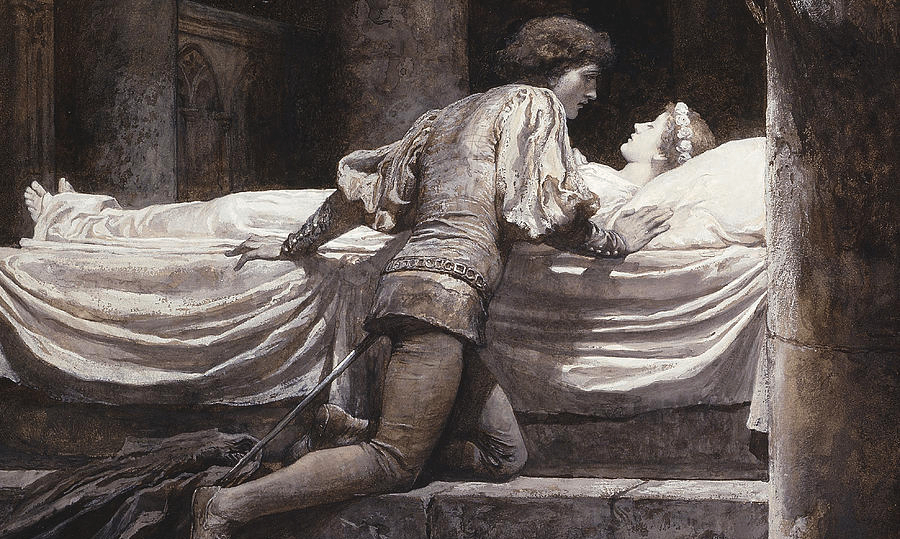
My grave is like to be my wedding bed.
― Romeo and Juliet
POSTHUMOUS DEVOTIONS
A monstrous miscarriage of justice is on the point of being committed. We refer of course to the conviction of Mr. Honoré Ardisson and his internment in an asylum for the criminally insane. The moment cries out for us to expose the hidden motives, more immediate than the law, that govern these ministers of justice, the magistrates of the court, who, in their own way, are guilty of a kind of violation. The legislator, in his infinite wisdom, has been cautious when it comes to condemning the violation of corpses: he has not provided for it in any article of law, which, in the spirit of the law, as we all know, is tantamount to encouraging it.
On this thorny subject, as on every other, the legislator appears to be in agreement with the conscience of the virtuous citizen, whose flashes of insight he is merely to record and refine. However, the majority of taxpayers, as a rule, only practice the violation of corpses in a superficial, albeit ostentatious, form. Whenever they find themselves in the position of having a corpse laid out on a bed at their disposal ― whether wife, husband, mother or child ― they have made it their solemn duty to bestow, as the old adage goes, « a last kiss on the icy brow of the deceased » but very few of them, it is to be regretted, have had the courage to proceed any further with their posthumous devotions, although entirely appropriate in the case, for example, of the loss of a wife or husband. This sudden insensibility and coldness of heart can be explained, though hardly excused, as the horror of that which no longer lives, which at its heart is nothing more nor less than the aversion to dead flesh that the human animal has acquired over the centuries through the habit of cooking his food. A thousand years from now, will cooking be the death of love? Is there any hope for romance? Be that as it may, conscious of the injury to the dead, the living strive to make amends with gifts of flowers and garlands, adorned with vows of undying love, full of sweet and noble words, and never followed with effect. It is not surprising that Mr. Ardisson, in the course of his career as a gravedigger, has been sickened by these fallacious inscriptions, and decided to set an example that all virtuous men should seek to emulate, in proving his love for humanity beyond the grave with more substantial acts of passion.
The practice of fornicating with the dead has always been considered pious and moral to the utmost degree. Without recalling the customs of certain cultures, who bury the living spouse with the deceased partner, let us note the vestige of this practice that remains in our own culture, namely that a widow does not marry again without some delay. This delay has no meaning unless it is devoted to sexual relations with the dead. The length of this term was no doubt primitively measured as the time that precedes the decomposition of the corpse. The Popes have always been strongly in favour of this posthumous union, without any limit of duration, as they have made more than clear by their continued hostility towards divorce, which enables the survivor to evade his or her conjugal duty, in this world and the next, in favour of an adulterer.
Modern science has shown us that this lifelong devotion to the dead is senseless, and that there is no use, at least from the point of view of reproduction, in pursuing sexual relations any more than three days after death. Beyond this term, the male corpse loses it reproductive faculties. Forensic science suggests that in practice the copulation window is even shorter, and that it is in the forty-eighth hour that the deceased is « snatched from the arms of their beloved ».
If posthumous copulation is such an excellent thing, why do the magistrates of the court pretend to regard Mr. Ardisson as a criminal and a madman, thus preventing other honest people from following his example? There are two reasons:
1. The violation of the dead, by some capricious aberration of military law, provides grounds for exemption from service. We admit that our patriotism would be somewhat troubled by the idea of seeing a number of conscripts, perhaps overcome with despair, choosing to spend a short spell in the cemetary over three years in the barracks. Furthermore, it is to be feared that the industrial purveyors of tricolour ribbons would give up their commerce in favour of more lucrative lines of business, namely as manufacturers of young corpses and sepulchral pimps. When news of Mr. Ardisson’s case reached the military authorities, they were thrown into turmoil and thought it best to guide the judges with an invisible hand.
2. There was an outcry no less violent among young unmarried girls, who were rightly jealous.
This last point was dismissed by Mr. Ardisson in the following terms: « I could not have my way with any young girls so long as they were alive, and that is why I had to resort to the dead. » We do not believe that in this instance Mr. Ardisson has expressed himself with his usual veracity. The intention of Mr. Ardisson could not have been, as it is now, only to give pleasure, in every way, to the judge. If the judge is indeed of the same opinion as the Law, as Mr. Ardisson imagined in all honesty, he must prefer ― unless he is a hypocrite, which we do not dare to suggest ― the violation of the dead, sanctioned by the law, to the violation of the living, explicitly forbidden unless one has a permit or government contract. It should also be noted that Mr. Ardisson was fond of taking home the severed heads of the young girls, as the poet once elegantly put it: « for his love’s dessert ». It was essential that the girl was already dead, otherwise he would have had to spoil his « words of such sweet breath composed » by preceding them with an act of brutal violence. Yes, Mr. Ardisson endeavours in every way to please the judge, but what does the judge want? His demands are vague and incoherent, and very much likely to shake the soul of every honest man, including that of Mr. Ardisson. In this way, the judge would have reached the goal which secretly he pursued: madness and the incarceration of this virtuous citizen.
 Samuel Lees