by Alfred Jarry
translated by Samuel Lees
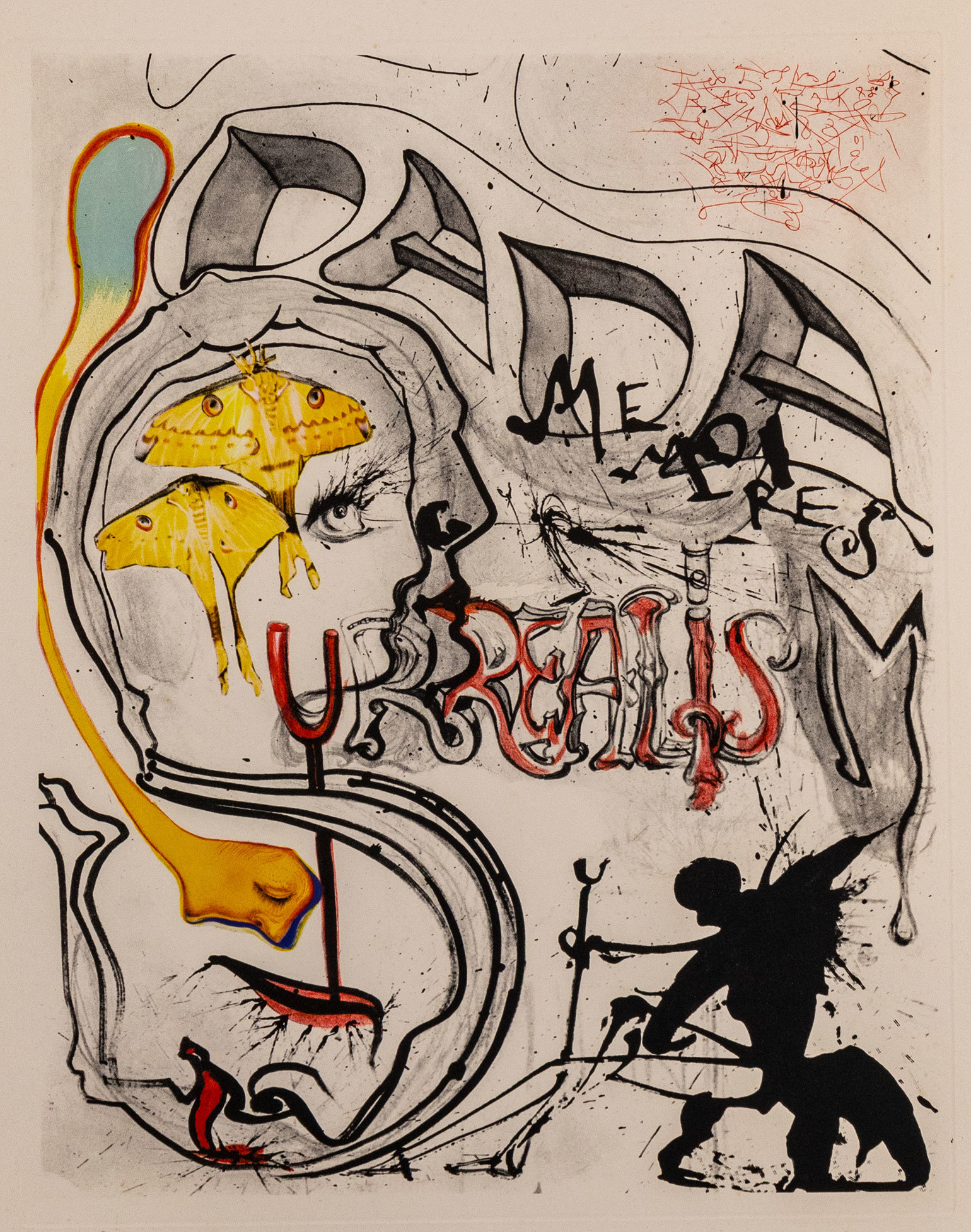
Experimental Psychology of a Policeman
We recently had the chance to examine some beautiful specimens of that prehensile organ of society, the policeman. Our dealings with them took place behind closed doors. The circumstances were propitious, though likely to cast them in too favourable a light, as, contrary to custom, we were not their prisoners, but instead the authorities had delivered them into our custody, under some pretext, with a view to carrying out some experiments.
We will dwell but briefly on the external morphology of these servicemen, in all points the same, only larger, than the familiar effigies that appear, for the edification of children, in productions of Punch and Judy. It should be noted, however, that while on duty the churlish authorities forbid them from donning the classic and majestical tricorn hat, much to the detriment of their traditional prestige. We quote the popular adage of dubious taste: « You can smell them before you can see them » only in order to derive the following philosophical lesson: that in reality, given the small number of specimens available ― there are often only five for every eight municipalites ― one never sees them, and by one we mean miscreants, despite the fact that policemen and criminals are made for one another.
As for their language, we have not discovered any extraordinary superfluity of adverbs.

We aim here only to give a brief outline of the policeman’s psychology, as we have already attempted, with some degree of success, with the soldier and the magistrate. It is hardly surprising that the habit of always being on the lookout for crimes and offences, or, preferably, for a restricted and classified number of crimes and offences, has, over the course of many generations, twisted their minds into a peculiar shape, by now well-defined and unique to their species. The time invites us then to cast an inquisitive eye into the mysterious depths of these obscure minds. A fact has come to light, in the course of our investigations, that might shock the man of virtue, namely that he and the policeman have very different notions of what, in the legal sense, constitutes a bad deed. The word « bad » does not convey much to the policeman, only that he must perform his duty, but for this he is remunerated, thus, to put it as plainly as possible, all that is bad for society is good for him, because it puts money in his pocket.
Thus do we condemn the vile desiderata* of the policeman: his land of Cockaigne* would be one in which no one hunts, except in times of prohibition and, of course, without a licence; they would only fish using illegal methods; rape would be widespread and murder the most common form of social contact. Despite our repeated threats, we could not obtain any confessions of a more precise nature; it seems that the policeman aspires but confusedly towards this bright and blessèd future. We can find no other explanation than his rare disinterest. He only has the courage to approve of murder when there is nothing in it for him, in other words, when it is sanctioned by the law, for example, the case of legitimate defence. The policeman is delighted when the bourgeois massacres the burglar who has climbed over the wall of his enclosure, but, owing to some strange scruple, this same policeman is dismayed whenever those on the other side of the wall are put to death. We propose a new and conciliatory method, which consists simply of introducing into one’s property the victims that one has taken the pains to procure from outside.
The mounted police generally proceed on foot for two reasons: the first, which they confessed to us, and which seems somewhat frivolous, is that someone would have to hold on to the reins, meanwhile one would quite like to offer them a drink. The second is that, proceeding most often in pairs, they usually bring along their uncle, even if neither of them actually has an uncle. This is the code name they use down at the yard to refer to some friend of theirs who follows them around in order to profit from every opportunity to wet his whistle. When choosing someone to be their uncle, they look for a person of shabby demeanor, so that he can pass easily for a bad egg, and subject also to the habit of holding his hands behind his back when he walks. They stand, as if by accident, on either side of him, and thanks to this innocent stratagem, they win the approval of the people as they pass from village to village, without having to cause the slightest trouble to anyone. As we have already noted, the capture of an authentic criminal is out of the question: the uniform can be seen from miles away. The policeman would have to go about in plain clothes, but then he would cease to be a policeman and would no longer have any psychology.
Notes
Desideratum ― something considered necessary or highly desirable.
Cockaigne ― a land of plenty in medieval myth.
 Samuel Lees