By Théophile Gautier
Translated by Samuel Lees
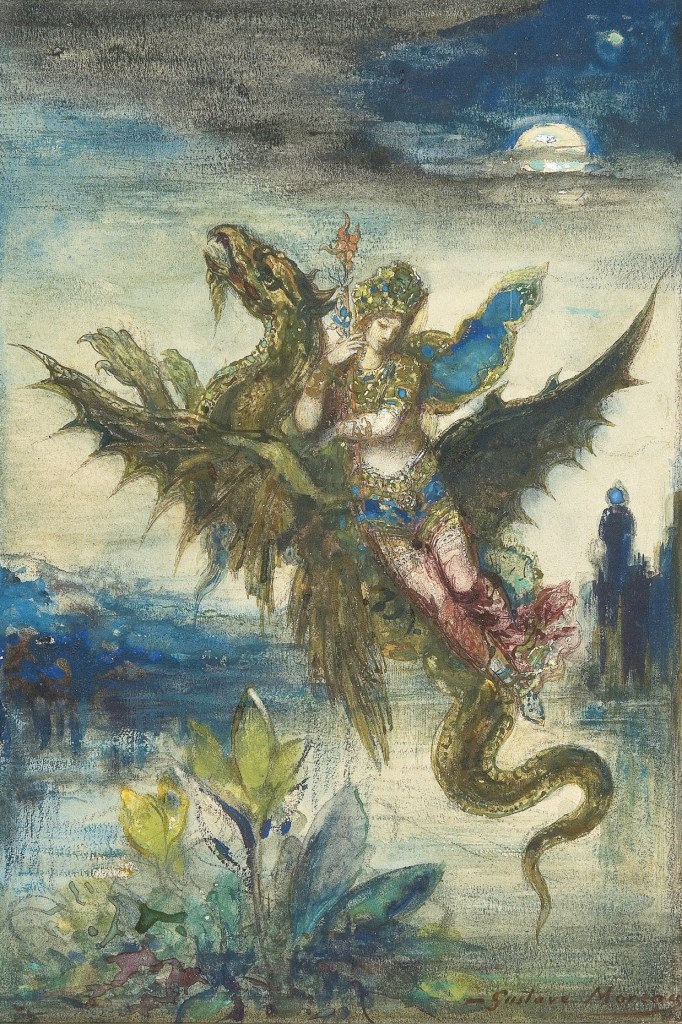
Preface
My dear Alfred,
It will be impossible for me to attend the day after tomorrow. Make excuses for me to our friends, tell them… that a terrible migraine confines me to my bed… tell them whatever you like. The truth, for you, is simply that I need three days of rest. My door is shut for seventy-two hours.
See you on Monday,
Th. Gautier
My good Eugene,
I return your coupon because I have resolved not to step foot outside my door until the evening after tomorrow’s, the day when I receive my capital from the press.
See you on Sunday,
TH.
Gautier dispatched these letters in the morning. That evening he received an urgent personal request.
My dear friend,
I need ― at the earliest opportunity ― a tale or a short story between 8 and 900 lines for the Musée des Familles.
It is for the forthcoming issue; I therefore need it by tomorrow evening at the latest.
Only you can accomplish this feat and I count on you.
Send as soon as it is ready.
Cordially,
X.
Here is that story.
I had instructed the porter that I would not receive any visitors, that if any one of my friends should call, to deny them my door, if they should ask the reason, to tell them that I had a migraine, and if they insisted upon seeing me anyway, to explain that I had gone away and would not return for several days. That morning I had made a solemn resolution to do nothing at all and I did not want to be disturbed in this important occupation. Certain that my solitude would not be troubled by any annoying characters ― they are not confined to the comedies of Molière, alas! ― I had made every preparation to be able to enjoy my greatest pleasure in complete comfort.
A large fire blazed in the hearth. A pale light slipped in through the closed curtains. Half a dozen cushions were strewn across the carpet. I was stretched out comfortably in front of the fire at a distance of a roast on a spit. A large Maroccan babouche* of oriental yellow and strange design danced on the end of my foot. My cat lay on my sleeve, just like Muezza, the cat of the prophet Mohammed and I would not have moved from that spot for all the gold in the world.
My eyes, already steeped in that exquisite somnolence that follows the voluntary suspension of thought, wandered absently around the room, from the charming sketch of Mary Magdalene in the Desert by Camille Roqueplan to the severe quill drawing of Aligny, and then to the great landscape of the four inseparables: Feuchères, Séchan, Diéterle and Despléchins ― the glories and riches of my poet’s abode. My sense of reality abandoned me little by little. I was buried beneath the waves in that bottomless sea of annihilation where so many oriental dreamers had left their reason, already shaken by opium and hashish.
The most profound silence reigned in the room. I had stopped the pendulum so that I would not have to listen to its endless tick-tock ― the beating pulse of eternity ― as when I am idle, I cannot abide the feverish and mindless activity of that little copper disc that paces from one corner of its cage to the other, marching on and on without ever advancing a single step.
All of a sudden, the doorbell rang ― ding dong !! ― a sharp, nervous, insufferably metallic sound fell into the bath of my tranquillity like a drop of molten lead that sizzles as it sinks into a dormant lake. Without a thought for my cat, curled up in a ball on my sleeve, I leapt to my feet as if launched by a spring. Trembling with rage, I unleashed every curse upon the half-witted porter who had let someone in despite my strict injunction. ― After a few moments, I settled back into my chair, my blood still simmering. I braced myself and prepared for the worst.
The door of the drawing room slid open and in peered the wooly head of Adolfo-Francesco Pergialla, an Abyssinian outlaw in whose service I was once, under the pretence of having a black servant. His white eyes sparkled and his flat nose dilated prodigiously. A broad smile spread across his big lips, to which he endeavoured to give an appearance of malice, disclosing a set of teeth like those of Newfoundland dog. He was dying to speak, making every possible contortion to get my attention.
― Well! Francesco, what’s up? ― When you have rolled your enamel eyes for an hour, like the bronze negro who had a clock in his belly, will I be any the wiser? Enough of this pantomime. Tell me in words ― in whatever dialect ― what this is about and who is it that comes to seek me out in the depths of my idleness.
Adolfo-Francesco Pergialla-Abdallah-Ben-Mohammed, Abyssinian by birth, once a muslim, a christian for the time being, knew all the languages in the world and spoke none of them intelligibly. He would begin in French, continue in Italian, and end in Turkish or Arabic, especially during awkward conversations concerning bottles of Bordeaux, liqueurs or sweets that had mysteriously disappeared. Luckily, I have polyglot friends. First we hounded him from Europe, after having exhausted Italian, Spanish and German. He escaped into Constantinople, in Turkish, where Alfred pursued him tirelessly. Realising that he was being tracked, he fled to Algeria, where Eugene was at his heels, following him through every dialect and shade of Arabic. From there, he took refuge in Bambara, Galla and other dialects from the heart of Africa, where only Abadie, Combes and Tamisier were able to run him into the ground. On this occasion, he replied resolutely in a mediocre Spanish, but very clear:
― Una mujer muy bonita con su hermana quien quiere hablar a usted.
― If they are young and pretty, show them in; if not, say that I am busy.
The rogue, who had an eye for the ladies, disappeared for a few seconds and returned followed by two women swathed in large white burnooses*, with their hoods up.
With the greatest courtesy in the world I presented a pair of armchairs to the ladies, but, seeing the pile of cushions on the carpet, they thanked me with a gesture, and, relieving themselves of their burnooses, sat on the floor with their legs crossed in the oriental fashion.
The one who sat opposite me, in the light that filtered through the crack in the curtains, could have been twenty years old. The other, much less pretty, seemed a bit older. We will only concern ourselves with the prettiest one.
She was lavishly dressed in the Turkish fashion. A jacket of green velvet, covered in jewels, squeezed her bee’s waist. Her striped gossamer shirt, bound at the neck by two diamond buttons, was cut in such a way as to reveal a white and well-formed chest. A tissue of white silk, studded with sequins, served as her belt. She wore large baggy trousers down to the knee. Stockings of embroidered velvet, in the Albanian style, graced her slender and delicate legs. Her pretty naked feet were enclosed in little marocain slippers, embossed, stitched, coloured and sewn with golden thread. An orange kaftan with silver flowers and a scarlet fez topped with a long silk tassel completed what seemed a rather strange outfit to pay visits in Paris in this dismal year of 1842.
As for her face, she had that regular beauty of the Turkish race. Her complexion was of a pale white like unpolished marble, in the midst of which her beautiful oriental eyes flourished mysteriously, like two black flowers, so clear and deep, under her long henna-coloured lids. She looked anxious and seemed embarrassed. She held her foot in one hand, and with the other, to hide her discomfiture, she played with a tress of her hair, loaded with ribbons, bouquets of pearls and sequins pierced through the middle.
The other, dressed in a similar fashion, but not as richly, remained silent and still. Calling to mind the appearance of the bayadères* in Paris, I imagined she was some almah* from Cairo, an Egyptian acquaintance of my friend Dauzats, who, encouraged by the warm welcome I had extended to the beautiful Amani and her brunette companions, Sandiroun and Rangoun, had come to beg my journalist’s protection.
― Ladies, what can I do for you? I said, lifting my hands to my ears so as to produce a rather satisfying salaam*.
The beautiful Turk raised her eyes to the ceiling, lowered them to the carpet, then looked at her sister with a profoundly meditative air. She did not understand a single word of French.
― Hola, Francesco! villain, knave, beggar, here, churlish monkey, make yourself useful for once in your life.
Francesco stepped forward with an air of importance and solemnity.
― Since you speak French so badly, you must speak Arabic pretty well. You shall play the role of dragoman* between myself and these ladies. I raise you to the dignity of interpreter. First, ask these two beautiful foreigners who they are, where they come from and what they want.
Without reproducing the various grimaces of the aforementioned Francesco, I will relay the conversation as if it had taken place in French.
― Sir, said the beautiful Turk through the negro’s organ, as you are a litterateur, you have no doubt read the Thousand and One Nights, the Arabic tales, translated or near enough by the good Mr. Galland. The name Scheherazade is not unknown to you I presume?
― Ah! the beautiful Scheherazade, wife of that ingenious sultan Schahriar, who, to avoid being cuckolded, married a woman in the evening and strangled her in the morning? I know her very well.
― Well! I am the sultana Scheherazade, and this is my sister Dinarzarde, who every night, without fail, says to me: « My sister, before it is day, tell us then, if you do not sleep, one of those beautiful tales that you know. »
― Pleased to meet you, though this visit is a bit unexpected. To what do I owe the distinguished honour of receiving in my home, poor poet that I am, the sultana Scheherazade and her sister Dinarzarde?
― Alas! I have reached the end of my scroll; I have told every tale I know. I have exhausted the faerie world. The ghouls, the genies, the wizards and witches were of great help to me, but everything wears thin eventually, even the impossible. The very glorious sultan, shadow of the Padishah*, light of lights, sun and moon of the middle Empire, begins to yawn terribly and toys with the handle of his sabre. This morning, I told my last story. My noble lord has agreed not to cut my head off just yet. On the back of a magic carpet of the four Facardins*, I hurried hither in search of a tale, a story, a novella, as tomorrow morning, when my sister gives her customary call, I must have something to present to the great Schahriar, the master of my fate. That idiot Galland deceived the world when he said that, after the thousand and first night, the sultan, his desire for stories finally satisfied, spared me. That is a lie: he is more thirsty for tales than ever, and his curiosity alone keeps his cruelty in check.
― My poor Scheherazade, your sultan Schahriar bears a terrible resemblance to our public; if one day we cease to amuse them, they cut off our heads, or they forget us, which is worse. They are horribly cruel. Your fate touches me, but what can I do about it?
― You must have some feuilleton, some novella tucked away. Give it to me.
― What are you asking, charming sultana? I have nothing ready and finished. I only work in the event of the most extreme famine, since, as Persius says, fames facit poetridas picas*. I still have enough to eat for another three days. Find Karr, if you can reach him across the swarm of wasps that drone around his door and beat their wings against his windows. His heart is full of delightful romantic novels, which he will relate between a boxing lesson and the fanfare of a hunting horn. Wait for Jules Janin at the corner of a column of an article, and, while he walks, he will improvise for you a story such as the sultan has never heard.
The poor Scheherazade raised her henna-coloured lids towards the ceiling with such sweet and misty eyes, such a tragic and desperate look that my heart melted at the sight of her and in that moment I made a great resolution.
― I have an idea for a short story. I will dictate it to you. You will translate it into Arabic, adding the ornaments, the flowers and pearls of poetry that it lacks. The title I have already. We will call our tale the Thousand and Second Night.
Scheherazade took a sheet of paper and began to write from right to left, in the oriental manner, with great speed. There was no time to lose: that evening she would have to be in the capital of the kingdom of Samarkand.
There was once in the city of Cairo a young man called Mahmoud-Ben-Ahmed, who lived in Esbekiek square.
His mother and father had died several years before, leaving him a meagre fortune, enough however that he could live without recourse to manual labour. Others would have tried to load a vessel with merchandise or joined some camels laden with precious fabrics to the caravan that goes from Baghdad to Mecca, but Mahmoud-Ben-Ahmed preferred the calm life, and his pleasures consisted in smoking tombeki in his narghile* while enjoying a sorbet and eating candied fruit from Damascus.
Although he was attractively-built, of regular features and handsome appearance, he never involved himself with women, and had replied several times to people urging him to marry and offering rich and eligible brides, that it was not yet time and it was really the last thing on his mind.
Mahmoud-Ben-Ahmed had received a good education: he often read from the oldest books; he wrote with an elegant hand, knew by heart the verses of the Koran, as well as the words of commentators, and could recite without error the Moallacats of the famous poets displayed at the doors of mosques. He was a bit of a poet himself and often composed rhyming and assonant verses, which he recited in song, in his own way, with plenty of grace and charm.
From smoking his narghile and dreaming in the cool evening air on the marble pavings of his terrace, Mahmoud-Ben-Ahmed’s head had become a bit exalted: it was his ambition to become the lover of a peri* or at the very least a princess of royal blood. This was the secret motive that made him receive marriage proposals with such indifference and refuse the offers of slave merchants. The only company he could tolerate was that of his cousin Abdul-Malek, a sweet but timid young man who seemed to share the modesty of his tastes.
One day, Mahmoud-Ben-Ahmed was making his way to the bazaar* to purchase some flasks of atargul* and other tonics from Constantinople that he required. In a narrow street he encountered a litter carried by two white mules, preceded by a retinue of richly dressed zebecs and chiauses*. The red velvet curtains of the litter were drawn shut. He backed against the wall to make way for the train. As it passed, a mad rush of air threw apart the curtains, and he saw a very beautiful lady sitting on cushions of gold brocade. The lady, trusting the thickness of the curtains, and believing herself hidden from all reckless eyes, had removed her veil owing to the heat. It was only a brief glimpse but it was enough to turn the head of the poor Mahmoud-Ben-Ahmed. Her complexion was of a rare whiteness. Her eyelashes looked as if they had been traced by a brush. She had a pomegranate mouth, which in opening revealed a double file of oriental pearls, more exquisite and lustrous that those that adorn the wrists and neck of the favourite sultana. Her manner was proud and pleasant, and in all her being there was something indefinably noble and regal.
Mahmoud-Ben-Ahmed, blown away by such perfection, stayed frozen to the spot for some time. Forgetting all about his errands, he went home with empty hands, carrying the radiant vision in his heart.
All night he dreamed of nothing but the beautiful stranger, and as soon as he was up, he set about composing a long piece of poetry in her honour, in which he lavished upon her the most chivalrous and flowery comparisons.
When the poem was finished, he transcribed it onto a piece of papyrus, with golden flowers and beautiful capital letters in red ink. Not quite knowing what to do, he put it up his sleeve and went to show this new composition to his friend Abdul-Malek, from whom he kept none of his thoughts a secret.
On the way over, he passed in front of the bazaar and entered the shop of the perfume merchant to pick up the flasks of atargul. There he found a beautiful lady wrapped in a long white veil covering all but her left eye. Mahmoud-Ben-Ahmed, from the left eye alone, instantly recognised the beautiful lady of the palanquin*. He was so overcome with emotion that he had to lean against the wall for support.
The lady with the white veil noticed Mahmoud-Ben-Ahmed’s distress, and kindly asked him what was the matter and if, by any chance, he found himself in an uncomfortable position.
The merchant, the lady and Mahmoud-Ben-Ahmed went to the back of the shop. A small negro brought him a glass of snow water on a platter. Mahmoud-Ben-Ahmed took several sips.
― Why were you so deeply affected by the sight of me? said the lady with a very sweet voice in which there was a note of tender concern.
Mahmoud-Ben-Ahmed told her how he had seen her near the mosque of the sultan Hassan at the exact moment when the curtains of her litter had come apart, and that since that moment he had been dying of his love for her.
― Really, said the lady, your passion was born as suddenly as that? I did not think love came so quickly. I am indeed the woman you saw yesterday. I was on my way to the baths and as the heat was oppressive, I had lifted my veil. But you did not get a good look, for I am not as beautiful as you say.
With these words, she removed her veil, revealing a face of such rare beauty, so perfect indeed that desire could not have found the slightest flaw.
You can imagine Mahmoud-Ben-Ahmed’s delight at such a favour. He covered her with compliments which had the rare merit of being perfectly sincere and free of exaggeration. As he spoke, full of fire and passion, the paper on which his verses were written slipped from his sleeve and rolled onto the floor.
― What’s this? said the lady. The handwriting is very beautiful and reveals a practised hand.
― It is, replied the young man blushing profusely, a piece of verse that I composed last night as I could not sleep. I have attempted to celebrate your perfections, but the copy is no match for the original, and my verses lack the gems needed to celebrate those of your eyes.
The young lady read the verses intently. Tucking them into her belt:
― Though they are full of flattery, they’re really not bad at all, she said.
She adjusted her veil and turned to leave. She paused on the threshold, and remarked, in a tone that pierced the young man’s heart:
― I sometimes come, on the way back from the baths, to purchase essences and boxes of perfume at Bedredin’s…
And with that she left.
The shopkeeper congratulated Mahmoud-Ben-Ahmed on his good fortune, and, taking him to the very back of the shop, whispered in his ear:
― That young lady is none other than the princess Ayesha, the caliph’s daughter.*
Mahmoud-Ben-Ahmed went home reeling from happiness, not quite able to believe what had just happened. Modest as we was, he could not ignore the fact that the princess Ayesha had looked upon him with a favourable eye. Chance, that great pimp, had exceeded his wildest expectations. He congratulated himself for not having yielded to the suggestions of his friends who had urged him to marry, or to the seductive portraits that old mothers paint of their young eligible daughters, who always have, as everyone knows, the eyes of a gazelle, a face like the moon, hair longer than the tail of Al-Borac, the mare of the Prophet, a mouth of red jasper, a breath of grey amber, and a thousand other perfections that fall away with the haik* and the bridal veil. How happy he was to have risen above all vulgar connections, to be free to abandon himself entirely to his new passion!
The image of the princess Ayesha, burning like a bird of fire before the setting sun, appeared again and again before his eyes. Unable to find rest, he went into one of those cabinets of wonderfully crafted cedar wood that are found on the outside walls of houses in oriental towns, in order to profit from the breeze and the cool air that a road inevitably creates. Sleep still did not visit him, as sleep is like happiness: it eludes those who look for it. He took his narghile and made his way to the highest terrace of his house, hoping to soothe his soul with the spectacle of a peaceful night.
The heavens were littered with more gold than a peri’s dress. The moon showed off its silver cheeks, like a sultana pale with love who leans on the trellis of her kiosk*. The cool air and the beauty of the night sky did Mahmoud-Ben-Ahmed a world of good, as he was a poet, and could not help but be moved by the magnificent spectacle the world presented to him.
From this height, the city of Cairo unfurled before him like one of those maps in relief on which the giaours* drew their fortified towns. The terraces decorated with pots of grasses and coloured with carpets, the squares where the water of the Nile glistened (as it was the time of the flood), the gardens from which clusters of palm trees sprang, the clumps of carobs and nopals*, the islands of houses divided by narrow streets, the tin domes of the mosques, the slender minarets that cut across the sky like an ivory rattle, the light and dark corners of the palaces all formed a picture perfectly arranged for the pleasure of the eyes. In the distance, the pale sand of the plain mingled its tints with the milky colours of the firmament. The three pyramids of Giza, roughly sketched in the bluish light, formed a gigantic triangle of stone on the edge of horizon.
Sat on a pile of cushions, his body enveloped in the elastic coils of his narghile, Mahmoud-Ben-Ahmed endeavoured through the transparent night to find the distant outline of the palace where the beautiful Ayesha slept. A profound silence reigned over the landscape. It could have been a painting, for no breath, nor murmur revealed the presence of a living being. The only distinguishable noise was the one made by the smoke of Mahmoud-Ben-Admed’s narghile as it passed through the water in the quartz bowl intended to cool his white exhalations. All of a sudden, a piercing scream broke out in the midst of this tranquillity, a scream of supreme distress, as an antelope might make, on the edge of the water, when it feels the claws of a lion on its neck, or its head is clasped in the jaws of a crocodile.
Mahmoud-Ben-Admed, shaken by this cry of agony and distress, sprang to his feet and instinctively reached for the handle of his yataghan*. He turned in the direction from which the sound came.
Far away in the shadows he beheld a strange and mysterious group: a white figure pursued by a mob of black figures, all bizarre and monstrous, with frenzied gestures, and a disorderly gait. The white ghost appeared to flit across the tops of the houses. The distance that separated her from her persecutors was so narrow that it was to be feared that she would soon be apprehended if the chase continued without anything coming to her rescue. Mahmoud-Ben-Ahmed thought at first that it was a peri with a swarm of ghouls at her heels, chewing the flesh of the dead between their huge fangs, or genies with their loose membranous wings and claws like a bat. He took from his pocket a comboloio* of coloured aloe grains, and began to recite, as a preservative, the ninety-nine names of Allah. He had not yet reached the twentieth, when he stopped. It was not a peri, but a woman ― fleeing by leaping from one terrace to another across the roads four or five feet wide that divide the dense block of Oriental towns. The genies furiously pursuing her were nothing more than zebecs, chiauses and eunuchs.
Two or three terraces and one road still separated the fugitive from the platform on which Mahmoud-Ben-Ahmed stood, but her strength seemed to be failing her. She twisted her head back convulsively on her shoulder, and, like an exhausted horse whose spurs are cutting into its sides, seeing the hideous mob that pursued her so close behind, she placed the road between her and her enemies with a desperate leap.
In her hurry she passed near Mahmoud-Ben-Ahmed, but she did not notice him, as the moon had lifted its veil. She ran to the end of the terrace which gave onto a second road larger than the first. Seeing that it was hopeless to try to jump across it, she searched with her eyes for some corner to hide in and catching sight of a large marble vase, she climbed into it like the genie that fits into the cup of a lily.
The raging mob invaded the terrace like a flight of demons. Their black or copper faces with their long moustaches, or hideously beardless, their sparkling eyes, brandishing damasks and khanjars* in their fists, the fury etched into their fierce and wicked faces, caused Mahmoud-Ben-Ahmed to recoil in fear, despite being brave by nature and deft in the handling of weapons. He surveyed the empty terrace, and seeing no sign of the fugitive, he thought she no doubt must have cleared the second road, and that the mob had continued its pursuit without paying any attention to Mahmoud-Ben-Ahmed.
When the clashing of weapons and the sound of footsteps had faded away, the fugitive raised her pretty pale head above the rim of the vase, and cast an eye over her surroundings with the air of a frightened antelope. She stood up, the charming pistil of this great marble flower. Seeing that there was no one other than Mahmoud-Ben-Ahmed, who smiled at her and made a sign that there was nothing to fear, she hopped out of the vase and approached the young man with a humble manner, her arms held out in supplication.
― For pity’s sake, lord, I beg you, save me, hide me in the darkest corner of your house, conceal me from the demons that chase me.
Mahmoud-Ben-Ahmed took her by the hand, led her to the stairs of the terrace, carefully closing the trapdoor behind him, and then to his room. In the light of the lamp, he saw that the fugitive was young, though he had guessed as much from the silvery timbre of her voice, and very pretty, which did not surprise him, as in the pale light of the stars he had remarked her elegant figure. She was fifteen years old at most. Her extreme pallor made her large almond eyes, whose corners extended as far as her temples, even more striking. Her thin and delicate nose gave a nobility to her profile, which would have made the most beautiful girls of Chios and Cyprus green with envy, and rivalled the marble beauty of the idols adored by the ancient Greeks. Her neck was charming and of a perfect whiteness, except for a light purple scratch, as thin as a hair or the thinnest thread of silk, from which a few drops of blood trickled. Her clothes were simple and consisted in a jacket trimmed with silk, muslin trousers and a colourful belt. Her chest rose and fell under her striped gossamer tunic, as she was still out of breath and had hardly recovered from her fear.
Once her spirit had settled, she kneeled before Mahmoud-Ben-Ahmed and told him her story:
― I was a slave in the harem of the rich Abu-Beker. I made the mistake of relaying to the favourite sultana a selam* or letter of flowers sent by a very handsome young prince for whom she had a secret passion. Abu-Beker, having intercepted the selam, fell into a terrible fury. He had his favourite sultana put into a leather bag with two cats and thrown into the river. Then he gave the order to have me beheaded. The Kizlar Agha* was placed in charge of the execution. But, taking advantage of the fear and disorder caused in the palace by the terrible punishment inflicted against Nourmahal, and finding the trapdoor of the terrace open, I fled. My flight did not go unnoticed, and soon the black eunuchs, the zebecs and Albanians in my master’s service fell to my pursuit. One of them, Mesrour, whose advances I had always resisted, scratched me from so close with his damask, that I was lucky to escape with my life. Once I even felt the edge of his sabre brush my skin, and it was then that I let out that terrible scream that you must have heard. I confess I thought my last hour had come. But God is God and Mohammed is his prophet. The angel Azrael* was not yet ready to take me to the bridge of As-Sirat*. Now you are my only hope. Abu-Beker is powerful, he will search for me, and if he finds me, this time Mesrour will have a more certain hand, and his damask will not be satisfied with stroking my neck ― she said while smiling, and passing her hand on the faint line traced in pink by the zebec’s sabre. ― Take me as your slave, I will dedicate the life that I owe to you. You will always have my shoulder to rest your elbow on, and my hair to wipe the dust from your sandals.
Mahmoud-Ben-Ahmed was very compassionate by nature, like all those who have studied letters and poetry. Leila, such was the name of the fugitive slave, expressed herself in choice terms. She was young and beautiful, and even if she were neither of these things, his humanity would have prevented him from sending her away. Mahmoud-Ben-Ahmed showed the young slave a Persian carpet with some silk cushions in the corner of the room, and on the edge of the dais a small meal of dates, candied citrons and rose preserves from Constantinople, which, distracted by his thoughts, he had not touched, and, what’s more, two water-cooling pots, of porous earth from Thebes, placed in saucers of Japanese porcelain and covered in a cloth beaded with pearls. Having thus provisionally installed Leila, he went back up onto his terrace to finish his narghile and find the last assonance of the ghazal* which he was composing in honour of the princess Ayesha, a ghazal in which the lilies of Iran, the flowers of Gulistan, the stars and all the heavenly constellations fought for a place.
The next day, as soon as the sun was up, Mahmoud-Ben-Ahmed remembered that he needed a bag of benzoin, that he lacked civet*, and that the silk purse stitched with gold and covered in sequins, in which he kept his Latakia*, was torn and needed to be replaced with something more rich and in better taste. Having barely taken the time to perform his morning ablutions and recite his prayer, he left his house, having copied out his poem and inserted it up his sleeve, not with the intention of showing it to his friend Abdul-Malek, but to deliver it to the princess Ayesha in person, in the event that their paths should meet in the bazaar, or in Bedredin’s shop. The muezzin*, perched on the balcony of the minaret, announced only the fifth hour. In the roads there were no fellahs* on their way to the market, pushing their donkeys loaded with watermelons, bundles of dates, cuts of mutton and chickens tied together at the feet. He was in the same part of the city as the palace of the princess, but nowhere could he see the crenellated walls washed with lime. No one appeared in the three of four small windows, obscured by a wooden trellis with narrow mesh, which allowed the people of the house to see what was going on it the road, but left no hope to the indiscreet looks and inquisitive eyes of those on the outside. Oriental palaces, unlike the palaces of Frangistan, reserve their splendours for the interior and turn their backs, so to speak, on passers-by. Mahmoud-Ben-Ahmed did not gather any fruit from his investigations. He saw two or three black slaves come and go. They were lavishly dressed; their proud and insolent expressions proved that they were conscious of belonging to an important house and a person of the highest quality. Our lover, observing these thick walls, made vain efforts to discover on which side the apartment of Ayesha was to be found. He was forced to withdraw without having made any discoveries. The hour was advancing and he risked being spotted. He therefore made his way to Bedredin’s, where, to win favour with proprietor, he purchased a number of expensive things for which he had absolutely no need. He sat down in the shop, questioned the merchant, inquired about his business, if he had happily rid himself of the silks and the carpets brought by the last caravan from Aleppo and if his ships had arrived at the port without suffering damages. In short, he committed every cowardice known to lovers. He still hoped to see Ayesha, but his patience bore no fruit. She did not come that day. He went home with a heavy heart, already accusing her of being perfidious and cruel, as if she had actually promised to be in Bedredin’s shop at that hour and had gone back on her word.
When he got back to his room, he put his babouches in the niche of sculpted marble cut into the wall by the door for this custom. He removed the kaftan of precious fabric which he had worn to enhance his good looks, and to appear with all his advantages in the eyes of Ayesha, and threw himself onto the divan with a gesture bordering on despair. It seemed to him that all was lost, that the world was going to end, and he complained bitterly of its fatality ― all this for not having met, as he had hoped, a woman he had not known two days before.
He closed the eyes of his body better to see the dream of his soul. He felt a light breeze cool his forehead. He opened his eyes and saw Leila sitting beside him, on the ground, waving one of those little butterflies of palm tree bark which serve, in the Orient, as fans and fly swatters. He had completely forgotten about her.
― What ails you, my dear lord? she said in a voice pearly and melodious like music. I can see that there is something wrong, your soul is in torment. If there was something your slave could do to disperse the cloud of sadness that hangs upon your brow, she would consider herself the happiest woman in the world and would not bear any feelings of jealousy towards the sultana Ayesha, however rich and beautiful she be.
Mahmoud-Ben-Ahmed shuddered at the mention of her name, like an invalid whose wound one touches by accident. He sat up slightly and cast an inquisitive eye at Leila, whose face expressed nothing but tender solicitude. And still he reddened as if he had been surprised in the secret of his passion. Leila paid no attention to this revealing and significant blush, and continued to offer her condolences to her new master:
― What can I do distract your soul from the gloomy thoughts that obsess it? perhaps a bit of music would dispel your melancholy. An old slave who was the odalisque* to the previous sultan taught me the secrets of composition. I can improvise verses and accompany myself on the gusle*.
And with these words, she went over to the wall and took down the gusle with the belly of lemon tree wood, ribbed with ivory, whose long neck was encrusted with mother-of-pearl, burgaudine and ebony. She played the tarabuka* and other Arabic airs with a rare perfection.
On any of the occasion the justness of her voice and the sweetness of the music would have charmed Mahmoud-Ben-Ahmed, who was very sensible to the pleasures of verse and harmony, but his brain and heart were so preoccupied with the lady he had seen at Bedredin’s, that he did not pay any attention to Leila’s songs.
The next day, happier than the last, he ran into Ayesha in Bedredin’s shop. To describe the joy he felt would be an impossible enterprise; only those who have been in love can understand it. He remained a moment without voice, without breath, a mist in his eyes. Ayesha, who noticed his agitation, was grateful and addressed him with a good deal of warmth, as nothing flatters those of high birth like the trouble they cause other people. Mahmoud-Ben-Ahmed collected himself and made every effort to be pleasant, and, as he was young, good-looking, had studied poetry and expressed himself in the most elegant terms, he noticed that he did not displease her, and he mustered the courage to ask the princess if he could see her again somewhere more propitious and certain than Bedredin’s shop.
― I know, he said, that I am not worthy to be the dust in your chimney, that between you and me there is a distance that could not be spanned in a thousand years by a horse of the prophet’s breed galloping at full tilt, but love has made me bold, and the caterpillar enamoured of the rose would not hesitate to confess his love.
Ayesha listened to all this without any sign of displeasure, and, fixing upon him her eyes full of languor, she said:
― Tomorrow at the hour of prayer go to the mosque of the sultan Hassan and stand beneath the third lamp. A black slave dressed in yellow damask* will meet you there. He will walk in front of you, and you will follow him.
And with those words, she lifted her veil and left.
Our lover was determined not to miss his appointment: he stationed himself beneath the third lamp and did not stray from it for fear that the black slave would arrive at that very moment. The slave was nowhere to be seen. It is true that Mahmoud-Ben-Ahmed had taken the precaution of arriving two hours before the appointed time. At last the negro dressed in yellow damask appeared. He went straight to the pillar against which Mahmoud-Ben-Ahmed was leaning. The slave, having closely observed him, made an imperceptible sign for him to follow. Together they left the mosque. The slave walked at a brisk pace, and led Mahmoud-Ben-Ahmed through endless detours across Cairo’s complicated network of roads. Our young hero tried at one point to spark a dialogue with his guide, but the latter, opening his large mouth furnished with sharp white teeth, indicated that his tongue had been cut off at the root. It would therefore be difficult for him to commit an indiscretion.
At last they arrived in a completely deserted part of the city, unknown to Mahmoud-Ben-Ahmed, though he was a native to Cairo and thought he knew its districts. The mute stopped in front of a wall washed with lime. There was no sign of a door anywhere. He counted six paces from the corner of the wall, and searched carefully for a spring no doubt hidden in a crack between the rocks. Having found it, he pressed the button, and a column turned on its axis, revealing a narrow dark passage. The mute went in, and Mahmoud-Ben-Ahmed followed. They descended more than a hundred steps, and made their way through an obscure and interminable corridor. Mahmoud-Ben-Ahmed felt his way along the walls. They were of natural rock, with hieroglyphs etched in. He realised that he was in one of the underground tunnels of an ancient Egyptian necropolis, which they had used to establish this secret passageway. At the end of the corridor, in the distance, there was a glimmer of blue light, which penetrated through the the gaps in some carved latticework. The mute pressed another button, and Mahmoud-Ben-Ahmed found himself in a room paved with white marble, with columns of alabaster and a fountain in the middle of it. The walls were covered with glass mosaics and lines from the Koran decorated with flowers and ornaments. Above was a vaulted ceiling, carved and sculpted like the inside of a hive or a cave with stalactites. Enormous scarlet peonies in Moorish vases of blue and white porcelain completed the decoration. In a kind of alcove cut into the wall, on a dais covered with cushions, princess Ayesha sat, radiant, and more beautiful than the houris* of the fourth heaven.
― Well! Mahmoud-Ben-Ahmed, have you written any other verses in my honour? she asked him, graciously making a sign for him to sit.
Mahmoud-Ben-Ahmed threw himself at Ayesha’s knees, took the papyrus from his sleeve, and began to recite his ghazal with great passion. It really was a remarkable bit of poetry. While he read, the princess’s cheeks brightened and coloured like an alabaster lamp. Her eyes sparkled and shone with extraordinary clarity. Her body became almost transparent and butterfly wings started to appear on her trembling shoulders. Unfortunately Mahmoud-Ben-Ahmed, too absorbed in his reading, did not look up from the page and see the transformation that had taken place. When he had finished, all he found was the princess Ayesha looking at him and smiling with an ironical air.
Like all poets, too obsessed with their own creations, Mahmoud-Ben-Ahmed had forgotten that the most beautiful verses are not worth a sincere word or a look illuminated by the light of love. ― Peris are like women, one must study them closely and take them just at the moment when they are going to rise to the heavens never to come back. ― The moment must be seized by the lock of hair that hangs over the forehead and the spirits of the air by their wings. That is how one makes a conquest.
― Mahmoud-Ben-Ahmed, you really have the rarest of talents as a poet, and your verses deserve to be displayed on the doors of mosques, written in golden letters, besides the most celebrated works of Ferdousi, Saadi, and Ibn-Omaz. It is a shame that absorbed by the perfection of your alliterated rhymes, you did not look at me before, you would have seen… what you might never see again. Your greatest wish came true right under your nose without you taking any notice. Goodbye, Mahmoud-Ben-Ahmed, who wanted to love none but a peri.
On that note, Ayesha got up with with a majestical air, lifted the curtain of gold brocade and disappeared.
The mute took Mahmoud-Ben-Ahmed, and led him back the way they had come. Mahmoud-Ben-Ahmed, surprised and upset to have been dismissed in this way, did not know what to make of it. He became lost in thought, unable to find a motive for the abrupt departure of the princess. In the end he put it down to a woman’s caprice that would soon sort itself out. But no matter how often he went to Bedredin’s shop to buy benzoin or civet furs, he never saw the princess Ayesha again. He went often to the mosque of the sultan Hassan and waited next to third pillar, but he never saw the black slave in yellow damask. This threw him into a black and deep melancholy.
Leila made a thousand efforts to distract him: she played the gusle; she recited wondrous tales; she filled his room with flowers, whose varied colours were so well matched that they gave the eyes as much pleasure as the nose. She even danced for him, with as much grace as the most skillful almah. Any one other than Mahmoud-Ben-Ahmed would have been touched by such consideration and attention, but his head was elsewhere, and he could not rest until he found the princess Ayesha. He had often wandered around the palace’s environs, but had never seen her. Nothing could be seen behind the trellised windows. The palace was like a tomb.
His friend Abdul-Malek, worried by his condition, came often to visit and could not help but comment upon the virtues and beauty of Leila, that equalled those of the princess Ayesha, if they did not exceed them. He was astonished by Mahmoud-Ben-Ahmed’s blindness, and if he were not afraid to violate the sacred laws of friendship, he would willingly have taken the young slave for a wife. However, without losing any of her beauty, Leila became more pale with each passing day. Her large eyes became languid. The rosy dawn of her cheeks gave way to the pale light of the moon. One day, Mahmoud-Ben-Ahmed noticed that she had been crying and asked her what was the cause:
― Oh my dear lord, I would never dare to tell you: a poor slave taken in out of pity. I love you, but what am I in your eyes? I know that you pledged to love none but a peri or a sultana. Others would be happy to be loved sincerely by a young and pure heart and would not worry about the daughter of the calif or the queen of the genies. Look at me, I turned fifteen yesterday. I am perhaps as beautiful as this Ayesha, whose name you mention even in your sleep. It is true that the magic carbuncle does not sparkle on my brow, and I do not wear the crown of feathers. Nor am I accompanied by a retinue of soldiers carrying muskets enchased with silver and coral. But I know how to sing; I can improvise on the gusle; I dance like Emineh herself; I am a devoted sister to you; what more must I do to touch your heart?
Hearing Leila speak in this way, Mahmoud-Ben-Ahmed’s heart became troubled. He said nothing and seemed deep in thought. A battle was being fought in his soul. On the one hand, he would have to give up on his most precious dream. On the other, he told himself that he would have to be quite mad to pine after a woman who had made a fool of him and dismissed him with words of mockery, when in his house he had, in youth and beauty, at least the equal of what he had lost.
Leila was on her knees, as if waiting judgement. Two tears rolled down the pale cheeks of the poor child.
― Oh! why couldn’t Mesrour’s sabre have finished what it started! she said, placing her hand on her slender white neck.
Mahmoud-Ben-Ahmed was touched by the pain in her voice. He lifted the young slave and placed a kiss on her brow.
Leila tilted her head like a caressed dove. She took him by the hands, and said:
― Look at me closely. Do I not look a lot like someone you know?
Mahmoud-Ben-Ahmed could not hold back a cry of surpise:
― The same face, the same eyes… in a word, all the features of the princess Ayesha. How did I not notice the resemblance before?
― Until now you had only looked at your slave with an absent mind, Leila replied in a tone of gentle mockery.
― If the slave with the yellow damask robe were to come in now, with a selam of love from the princess Ayesha, I would refuse to follow him.
― Is that right? she said in a voice more melodious than the nightingale singing to the well-belloved rose. And yet, one must not be to too harsh with this poor Ayesha who resembles me so.
Mahmoud-Ben-Ahmed pressed the young slave to his heart. You can imagine his astonishment when he saw Leila’s face brighten, the magic carbuncle glowing upon her forehead, and wings, laced with tiger flowers, spring from her charming shoulders! Leila was a peri!
― My dear Mahmoud-Ben-Ahmed, I am neither princess Ayesha, nor Leila the slave. My real name is Boudroulboudour. I am a peri of the highest order, as you can see from my wings and carbuncle. One evening, gliding through the air near your terrace, I heard you vow only to be loved by a peri. This ambition pleased me. Ignorant mortals, being vulgar and lost in earthly pleasures, never dream of such rare things. I wanted to test you. I disguised myself as Ayesha and Leila to see if you would recognise me and love me in my human form. ― Your heart has been more discerning than your spirit, and you have more virtue than pride. The fanatical devotion of your slave made you prefer the princess. That I expected. One moment, seduced by the beauty of your verses, I was on the point of betraying myself, but I was afraid you were only a poet in love with your rhymes and imagination, so I withdrew, counterfeiting an air of superb disdain. You wanted to marry Leila the slave. Boudroulboudour the peri will take her place. I will be Leila for everyone and a peri just for you, as I wish for your happiness, and the world would not forgive you a happiness greater than its own. I may be a fairy, but I cannot defend you from the jealousy and malice of men.
Mahmoud-Ben-Ahmed accepted these conditions with delight, and the wedding took place as if he had really married the little Leila.
Such is the substance of the story I dictated to Scheherazade by way of Francesco.
― How did they like your Arabic tale, and what happened to Scheherazade?
― I have not seen her since.
I think that Schahriar, dissatisfied with this story, would have finally cut off the poor sultana’s head.
Some friends who came back from Baghdad told me that they had seen a madwoman who believed that she was Dinarzarde from the Thousand and One Nights sitting on the steps of a mosque, repeating again and again:
― Sister, tell us one of those beautiful stories that you tell so well.
She waited several minutes, lending her ear with great attention, and as no one replied to her, she began to cry, and wiped her tears with a tissue stitched with gold and stained with blood.
*
Notes
Babouche ― a heelless slipper worn in the Middle-East.
Burnoose ― a hooded cloak worn by Arabs and Berbers.
Bayadère ― a Hindu dancing-girl.
Almah ― an Egyptian singer or dancing-girl.
Salaam ― a respectful ceremonial greeting in Muslim countries
Dragoman ― an interpreter or guide in countries where Arabic, Turkiish or Persian is spoken.
Padishah ― a ruler of a muslim state
Les Quatre Facardins ― a story in French by the Irish writer Antoine Hamilton inspired by the Thounsand and One Nights
Fames facit poetridas picas ― from the prologue of the Satires of Persius, translated by William Drummond :
What taught the parrot to cry, hail?
What taught the chattering pie his tale?
Hunger; that sharpener of wits,
Which gives ev'n fools some thinking fits.
Narghile ― a large oriental tobacco pipe in which smoke is drawn through water.
Peri ― a sprite or supernatural being in Persian mythology.
Bazaar ― a marketplace.
Atar-gul ― (atar of roses) a perfume or essential oil made from flowers or petals.
Chiaus ― a court official in the Ottoman Empire.
Palanquin ― a covered litter carried on poles.
Caliph ― the political leader in the muslim world.
Haik ― a covering for the head and body.
Kiosk ― a Turkish garden pavillion.
Giaour ― name for a non-muslim in Turkey.
Carob ― an evergreen shrub or tree native to the Mediterranean region.
Nopal ― a prickly pear cactus.
Yataghan ― a sword used in muslim countries between the 16th and 19th centuries.
Comboloio ― a muslim rosary containting ninety-nine beads.
Khanjar ― a kind of dagger used in Arabian countries.
Selam ― a secret language of flowers used by the women in a harem to communicate secret messages.
Kizlar Agha ― the head of the eunuchs who guarded the imperial harem.
Azrael ― the Angel of Death in Islam.
As-Sirat ― the bridge leading to paradise.
Ghazal ― a poetic form used for love poetry in the Middle East.
Benzoin ― a resinous substance.
Civet ― a musky perfume produced by the civet cat.
Latakia ― a type of tobacco from Syria.
Muezzin ― the person who give the call to prayer from one of the minarets of a mosque.
Fellah ― a peasant.
Odalisque ― a female slave in a harem.
Gusle ― a stringed instrument like a lute with a single string.
Tarabuka ― goblet drum.
Damask ― a rich patterned fabric.
Houri ― a nymph in the form of a virgin found in paradise.
 Samuel Lees